 Dear Dora,
How many fellowship applications do most people submit when starting their postdoc?
– Dom, grad student

We’re following in the tradition of open discussions among scientists that has resulted in important advances in both science and society.
by
Dear Dora,
How many fellowship applications do most people submit when starting their postdoc?
– Dom, grad student
by
 I think that there’s a little engineer in every scientist. In the scientific pursuit for knowledge, we often find ourselves optimizing, refining, and generally improving the ways we perform our research. Some ideas we can act upon ourselves by, for example, altering our methods or protocols. Others innovations are not so simple – concepts for improvements to products or for entirely new tools with which to perform our work.
by
 In the last post, we explored the use of bibliographic databases to locate papers and articles. In this final post we will look at ways in which to organize what you’ve found.
by
 For thousands of years, philosophers, psychiatrists and Eli Lilly have attempted to define the path to happiness, but remarkably, a singular solution remains elusive. Yet finding daily happiness in the lab is key to our success as the process of discovery is long, arduous and will try the patience of even the most dedicated researchers. In hopes of empowering scientists at the bench, we present the BenchFly Theory of Lab Happiness.
by
 Mark Twain once stated, “Twenty years from now you will be more disappointed by the things you didn’t do than by the ones you did do. So throw off the bowlines. Sail away from the safe harbor. Catch the trade winds in your sails. Explore. Dream. Discover.” Sage advice. While spending time agonizing over missed opportunities in the past may not be the best use of our time in the present, a quick post mortem on our graduate school experience may help current students avoid some of the same mistakes we made.
by
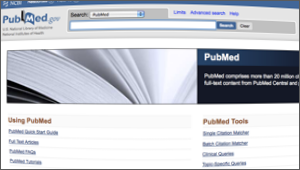 Google and Yahoo make it easy to search the web, whatever you’re looking for you’ll probably find something out there! Thorough searching of bibliographic databases however requires a little more effort, although this is repaid by the quality of the material retrieved. In this post we will be looking at how to search a bibliographic database. All bibliographic databases are different, but many of the same general principles apply. Here, we will look at PubMed which is a freely available and covers journals in life sciences and medicine.
by
 Dear Dora,
I’m a third year postdoc with no first author papers, although we’ll be submitting a manuscript in the next year. My husband was just offered a position in another city and now I’m faced with the decision to move and change labs or try to stay and deal with the distance. How bad does a three year postdoc with no papers look on a CV? Any advice?
– Katelyn – Postdoc
by
 Literature research skills are essential for any scientist. An important part of scientific research involves being fully clued up on your research topic and ensuring that you’re not replicating work already done by others. Good literature research skills allow you to quickly identify relevant papers, reports, reviews, books, websites and patents from the ocean of scientific literature. Over several posts I’ll give you some tips on how to improve your literature skills and avoid some of the pitfalls.
by
 Dear Dora,
I can see my rotation project expanding to a thesis project that would actually overlap with two labs in the department. Should I consider joining two labs jointly, or just setting up an official collaboration?
– Darren, grad student
by
 Dear Dora,
I am currently a postdoctoral fellow working on ssr markers in mulberry. The work is a bit monotonous, which is causing me to lose interest in the field. I love basic research and would like to transition to a more interesting project or field, do you have any advice for how to move forward?
– Mahadeva, postdoc
