
 I was trying to make a plasmid that had various parts from five other plasmids. Normally, I’d say “good luck” to anyone trying a three point ligation and so I considered a five point ligation to be a bit beyond mere mortals such as myself. But with the isothermal assembly reaction, the lab downstairs has had good luck with three and four point ligations. So it was worth a shot…
Flyceum: Your Science. Your Career.
We’re following in the tradition of open discussions among scientists that has resulted in important advances in both science and society.
The Isothermal Assembly Reaction: My Cloning Hero
by
Is First Year Burnout Normal?
by
 Dear Dora,
I am a first year PhD student from a foreign country, and I work 12 or 13 hrs a day in a molecular biology lab. I get no guidance from my advisor and the people around me are unfriendly. I used to cook and play the ukulele but now I work all the time. I am exhausted and feel guilty, because I do not get good results. I am doubting this career choice, wondering whether I can do it, and approaching first year burnout.
A hopeless PhD student
Revitalizing Science in the Classroom
by
 The recent update to the National Academies’ 2005 report to congress, Rising Above the Gathering Storm, paints a bleak picture for the future of science in the classroom should nothing change. The World Economic Forum ranks the United States 48th in quality of math and science education. Ouch. It’s clear that fundamental changes in our educational system must be made beyond cutting a check and crossing our fingers. We must revitalize our approach to science in the classroom in order to effectively educate and inspire future generations of scientists. But where do we even begin?
Dear Dora: Happy One Year Anniversary!
by
 This week we’re excited to celebrate the one year anniversary of the Dear Dora column! We’ve been extremely fortunate to have worked with Dr. Dora Farkas and are thrilled she’s been a part of BenchFly from the early days. We sat down with Dora to find out if there was any advice she’d like to take back, if her own grad school experience was a breeze and if there are particular challenges that she sees facing students and postdocs in the coming years.
How to Become a Great Graduate Student
by
 Following-up on What Makes a Great Student in the Lab?, we asked our panel of experts about specific actions we could take to set ourselves up for a successful graduate career. The PIs help set our expectations for how many years we should plan to be in school, how much initiative we should take and what to expect if we decide to leave the bench.
How Many Postdoctoral Fellowships Should I Tackle?
by
 Dear Dora,
How many postdoctoral fellowships do most people apply for when starting their postdoc?
– Dom, grad student
What Makes a Great Student in the Lab?
by
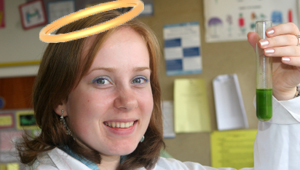 Nobody starts graduate school thinking, “I’d like to be average. I’ll be happy just blending into the background and having to remind my PI of my name on my graduation day.” We all want to do our best, become a great graduate student and ultimately blossom into great scientists. Yet, there’s often one little wrinkle in executing the plan – what exactly is a great student and how do we become one?
The Graduate School Survival Guide
by
 (In honor of the beginning of the academic year, we’re revisiting our Graduate School Survival Guide Series that was previously posted.)
All over the country this week a new crop of eager young scientists begin their journey of discovery. Graduate school is a great time of learning and exploration, but it can also be stressful – especially the beginning. Perhaps the hardest part about the transition to grad school is the uncertainty involved. When will I graduate? Who should I work for? What’s expected of me? Can I drink the lab ethanol?
Don’t Mislabel Me (Just My Bottles)
by
 Dear Dora,
Is it wrong to intentionally mislabel buffer bottles to keep people from stealing them?
– WV, grad student
The Seven Habits of a Highly Successful Scientist
by
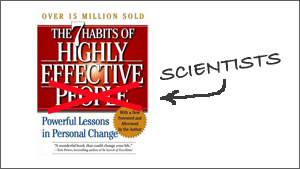 It’s been over twenty years since Stephen Covey first published his best-selling self-help book The Seven Habits of Highly Effective People. That means it’s also been over twenty years that we’ve been pushing “reading it” to the bottom of our to-do list (“Let’s see, I could either set up another experiment or read some cheesy self-help book…”). But 15 million copies don’t sell themselves, so we figured it was time to take a look under the cover. In the interest of your to-do list (and wallet), we’ve adapted Covey’s principles to create The Seven Habits of a Highly Successful Scientist…
