
 The ability to communicate effectively is one of the most important talents of a good scientist. Whether it’s standing in front of a poster, giving a ten minute talk at a meeting, or writing the next Citation Classic, scientists who connect with their audience create a better impression of themselves and their work than colleagues who don’t. The good news is that although there are examples of outstanding, naturally-gifted communicators (see Barack Obama) scientific communication is an acquired skill. The more you work at it, the better you’ll get.
Flyceum: Your Science. Your Career.
We’re following in the tradition of open discussions among scientists that has resulted in important advances in both science and society.
How to Give a Good Talk
by
The Lab Desktop: Looking Busy at Work (When You’re Not)
by
 A lab desktop is probably the last thing most of us want to stare at during a long day at the bench. It’s also far nerdier than the gorgeous beachscape of picture from your last vacation that is currently filling the role. But if we told you that a lab desktop can make you look like you’re working hard, when the truth might suggest otherwise, it might not sound like such a bad idea afterall…
Changing Thesis Projects: Death Sentence or New Life?
by
 Dear Dora,
When is it too late to consider changing thesis projects?
– Casey, Graduate student
5 Laboratory Techniques That’ll Get You Punched in the Face
by
 When first learning laboratory techniques, it’s important to start with the ones that will help you keep your front teeth. We’ve discussed some of the best ways to fit into a lab, but often the worst offenders don’t even realize what they’re doing wrong. So this is directed at the select few who are making life difficult for the rest of us. If it turns out you’re “accidentally” performing one of these, it might be better to knock it off before getting knocked out…
LabLibs: Let Chuck Norris Protect Your Bench
by
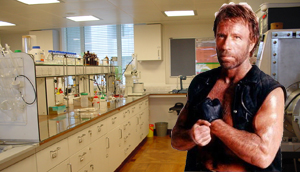 Hmm, on Friday we had six eppi tube racks and three pipetman. Then we took Monday off. Now we have one eppi rack and zero pipetman – that math doesn’t seem right. Looks like it’s time to call in the big guns…
The Lab Budget’s in More Red than a Friday the 13th Movie
by
 Dear Dora,
Our lab frequently operates in the red, but my PI says it’s normal. Are they telling the truth or should I be seriously concerned about my job security?
-Wes, grad student
If You Don’t Disaster-Proof Your Bench Now, You’ll Hate Yourself Later
by
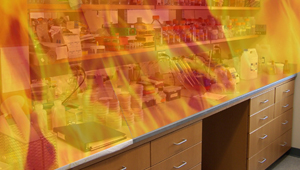 I was recently in Nashville, TN when a storm of the century hit the area. What started out as a typical thunderstorm, escalated to a relentless pounding by thunder, wind and rain. After two days of flooding and landslides, many homes and businesses were destroyed and clean water was a luxury. The tragedy highlighted just how quickly things can go from sunny to scary and while we may have insurance on our homes, we surely don’t take out a policy on our bench. But that could be a big mistake…
Is a Lab Holiday Party Too Much to Ask For?!
by
 Dear Dora,
Is it too much to expect a holiday party from your PI- even if it’s just a lunch outing?
-TJ, graduate student
You Should Try Some PCP: A Model Scientific Conference
by
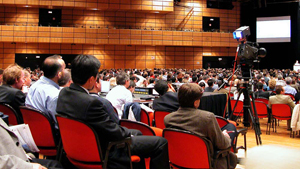 Recently we asked how many conferences scientists should attend each year. The vast majority of respondents felt two conferences a year was the ideal number – enough to make it to a large society meeting and a small, specialized conference. While most of us are familiar with the format of the usual suspects (ACS, AACR, SfN, Gordon conferences – the list goes on), there is another model out there that deserves some attention.
Seven Steps to Successful Summer Student Supervising
by
 As finals wrap up in colleges everywhere, graduate students and postdocs across the country can now be overheard exclaiming, “this summer’s going to be so awesome! I’m going to have an undergraduate student working with me and with four hands instead of two, this project is going to take off!” Oh, it’s going to take off – in what direction is the real question…
