
 Today, we are proud to announce the addition of a new Proteomics category at BenchFly! As a field, proteomics – the large-scale study of protein structure and function – has rapidly evolved since it’s birth in the late 1990s. Over the years, advances in laboratory techniques and instrumentation have played a dominant role in fueling this growth and we are excited to be a part of it.
Flyceum: Your Science. Your Career.
We’re following in the tradition of open discussions among scientists that has resulted in important advances in both science and society.
BenchFly Welcomes the Proteomics Community!
by
Starting a Family, Finding a Job and Managing Your Boss
by
 Thanks for all of the great questions! We’re addressing three questions each month, so If you don’t see your question this time, keep an eye out for our future issues where it will likely show up! Send your questions to [email protected].[Continue Reading…]
Tetrahymena: Little Creature, Big Discoveries
by
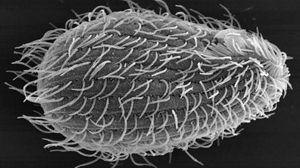 You probably didn’t notice, but if you’ve ever dipped a toe into a pond, or swam in a stream, you would have bumped into this furry looking microscopic creature called Tetrahymena. This fresh water inhabitant may be small and single celled, but it has played a huge role in discoveries that contributed to our understanding of the fundamental principles of eukaryotic biology.
We’re Gonna Need a Bigger Lab: Large Animal Models in Research
by
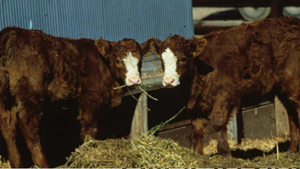 The main large animal models used for biomedical research are domesticated livestock species, such as cows, sheep, goats, pigs, and occasionally horses. This section will not cover primate models, or companion animals such as dogs and cats, which although are “large animals” have their unique set of attributes and issues as animal models. Large animal models are not as widely used as mice, flies, or nematodes. One reason for this is the obvious need for space to maintain these animals.
The Almighty Fungi: The Revolutionary Neurospora crassa
by
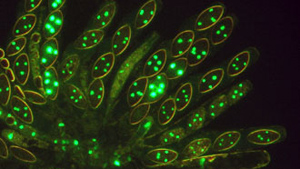 “This brief paper, revolutionary in both its methods and its findings, changed the genetic landscape for all time”.
This is how Norman Horowitz started a historical account celebrating the 50th anniversary of the landmark paper by Beadle and Tatum, published in 1941(Horowitz 1991). This work with the filamentous ascomycete fungus Neurospora crassa (Beadle and Tatum 1941), started off a series of important breakthroughs that brought the fields of biochemistry and genetics together and initiated a revolution: the explosive development of biochemical genetics and molecular biology. Undeniably, the one-to-one relationship between genes and enzymes (the “one gene, one enzyme” hypothesis), a concept derived from this and follow-up work, had a tremendous impact on biology.
Saccharomyces cerevisiae a.k.a Budding/Baker’s/Brewer’s Yeast
by

Yeast, specifically Saccharomyces cerevisiae, have had a tremendous impact on not only the scientific community but on the greater world. The initial scientific studies in yeast lead to the birth of modern chemistry, microbiology and biochemistry. Also, the next time you enjoy an ice cold beer or savor a delicious piece of bread, thank these little guys for their many contributions to the world.
An Ingenious Solution for Monitoring Reaction Progress
by
Despite it’s importance, reaction monitoring can be lax, in part because of the hassle of getting into a sealed round-bottom in the middle of a reaction. We have to unclamp, flip-up septum, re-clamp, remove septum, take sample, replace septum, unclamp, seal septum, reclamp then get on with the TLC. After all that work, it’s time for a nap…
Switching Careers? Try the Sampler Platter: Internships
by
 Many of us know what it’s like to sit at the bench and dream of what else is out there. Maybe it’s industrial experience that intrigues us, maybe it’s something far more removed from the lab. In either case, the idea of taking a chance and diving in to a new career can be terrifying. What if we don’t like it? Are we giving up everything we’ve worked for on a whim? Who would hire us with no experience? The overwhelming feeling of uncertainty can be paralyzing and ultimately, prevent many of us from finding our true calling.
Five (Plus) Web Resources You Should be Using Right Now
by
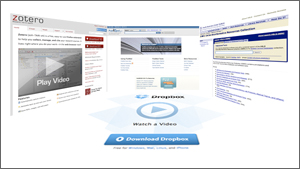 Being a scientific researcher has gotten much easier than it was 15 years ago. Literature searches can be performed online, and many times full text for articles retrieved from these searches is also readily available. Electronic database searching has streamlined research and made writing the Background and Introduction sections of manuscripts much easier. Here are some more tools that will help reduce the time you spend on writing, searching the literature and finding methods. They’re all free, too.
DNA Electrophoresis Sample Loading
by
The Video:
The DNA electrophoresis video is in two parts. The first being the overview of electrophoresis and the second being an up close loading of samples in a gel. The reason for the first part is because I needed to fill in time and I wanted to see how well the video would time compress. I like playing around with that stuff, so I just did it. The second part was to take advantage of my new High Definition(HD) camcorder.
