
 Standing in front of a packed seminar room and sharing your ideas using Powerpoint is an important part of research. In that respect, Tim Lee is like any other scientist. Now, the fact that his seminars start at 10pm on Saturday nights and require a two-drink minimum- well, that’s a bit more unusual…
Flyceum: Your Science. Your Career.
We’re following in the tradition of open discussions among scientists that has resulted in important advances in both science and society.
Scientist Turned Comedian: Tim Lee
by
Authorship, Feuding and Career Doubts
by
 Thanks for all of the great questions! We’re addressing three questions each month, so If you don’t see your question this time, keep an eye out for our future issues where it will likely show up! Send your questions to [email protected].
5 Library Resources You Should be Using
by
 Before I became a librarian, I worked as a neuroanatomy and immunohistochemistry technician for almost 20 years. After I completed my library degree, I found that working in a research library affiliated with a medical school allowed me to stay in touch with the research community while giving my hands a break from benchwork. The amount of research at my institution that I am now involved with is more varied than in my prior life as a tech.
Model Organism Week: EEK! The Mouse.
by
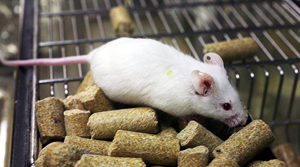 The mouse has been used for years as a model vertebrate organism and as such has allowed for not only groundbreaking work in the basic sciences but also the development of treatments, as well as cures, for many notorious diseases.
Model Organism Week: Getting to Know Your Worms (C. elegans)
by
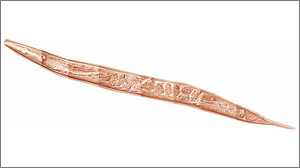 What is so impressive about microscopic nematodes as a biological model? Sidney Brenner first answered that question in his 1974 paper “The Genetics of Cenorhabitis elegans” where he introduced the nematode as an ideal model for studying genetics. The purpose of this blog is to enlighten the community about C. elegans and their contribution to science.
Model Organism Week: Research’s Next Top Model
by
 Only in the past three decades has Danio Rerio (Zebrafish) started to call the lab their home. Since then, they have helped in finding cures for cancer, understanding more about embryological (vertebrate) development, and vertebrate behavior. One lucky zebrafish has also gone where few humans have been: space. On June 22nd 1976 the space station Salyut 5 was launched, with one of the crew members being a zebra danio.
Drosophila melanogaster: The Fruit Fly.
by
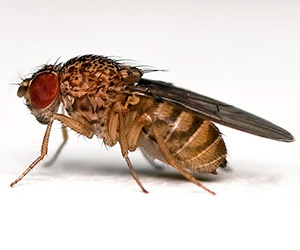 If fruit flies could have an ego and could understand their contributions to research they would be pretty proud little model organisms. They would walk around on your fruit like, “ha! How about that? Whose banana now? This is my banana now…”
UCSC Visigene: A Gene Expression Database You Need
by
Whether we’ve just started a project or we’re expanding our current one, there are few things more overwhelming than learning about a new gene from square one. Just understanding the logistics can be a killer (Where is it expressed? What other proteins interact with it?…) and usually necessitates reading/skimming/sleeping through a chest-high pile of reprints. Until now…
Ethical Dilemmas, Micromanagers and that Evil Email
by
 Another juicy issue! Thanks for all of the great questions! We’re addressing three questions each month, so If you don’t see your question this time, keep an eye out for our future issues where it will likely show up! Send your questions to [email protected].
“Seeing” the Big Picture: Vision Revolution Author Mark Changizi
by
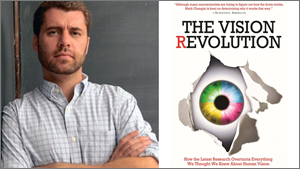 As research scientists, many of us spend a very large amount of time working on a very small subject. In fact, it’s not unusual for a biochemist to go through their entire career without ever physically observing the protein or pathway they work on. As we hyper-focus on our own niche of science, we run the risk of forgetting to take the blinders off to see where our slice of work fits in to the rest of the pie.
