
Whether brute-forcing through hundreds of mini-preps or setting up so many reactions that you run out of round-bottoms, it’s not unusual to feel like a robot from time to time. It’s normal. However, if that robotic feeling doesn’t seem to be going away and you have a craving for WD40, call your doctor – or mechanic – immediately. Watch this video to see what can happen to an otherwise normal grad student after too much repetition…
Flyceum: Your Science. Your Career.
We’re following in the tradition of open discussions among scientists that has resulted in important advances in both science and society.
Don’t Be Such A Scientist! An Interview with Randy Olson
by
 As scientists, we should constantly strive to improve our communication skills. We could spend our entire career hoping to master the art on our own through trial-and-error. Or, we could just learn from great storytellers – and what place communicates a story better than Hollywood? What if a tenured professor actually left their job to go to Hollywood to learn how to communicate and then came back to share everything they learned? But that’s probably never happened – or has it?…
How to Make an Old-fashioned
by
How many protocols can you follow and then actually drink?! Unless you like the taste of silica gel or Tris buffer, probably not many…
The Hallmark for Scientists (Free Card Inside!)
by
 The holidays are upon us, which means we can all look forward to the painful search for the “perfect card” to give to friends and family. There will be rows of cards packed with lame jokes and terrible puns and none will truly relate to the world we scientists live in. But that’s about to change…
Giving Thanks on Thanksgiving!
by
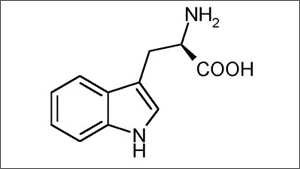 Today is about much more than spending time on BenchFly! But we’re honored that in between tryptophan-induced comas, we’re able to share a few minutes of the day with you. We want to take this opportunity to say a few words, but we’ll make it quick before Uncle Dave starts secretly digging into the fridge and eating all of your leftovers…
Trick for Calculating Molarity
by
Research is filled with numbers- from activation energies to reaction rates. While many of us can artfully dodge many of the gruesome equations associated with quantum mechanics or enzyme kinetics, one basic calculation remains inescapable.
Making DNA Look Simple
by
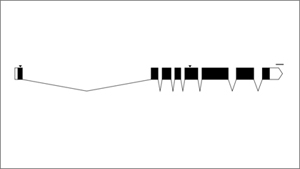 Biologists, especially people doing genetics, often want to show a diagram of a gene they’re studying, separated into its various parts (e.g. exons and introns) and displayed in a clear, intelligible way. Perhaps even more importantly, they want to include this picture in a publication, which means that it shouldn’t get blurry when it’s printed or magnified on a screen. I recently made a simple web app that helps biologists make these pictures, which I call the Exon-Intron Graphic Maker.
BioKM Interview: Online Lab Management
by
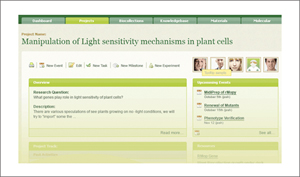 Managing experiments, data and projects can be a challenge. Luckily for us, people like Jonathan Gross, Founder of BioKM are working on solutions to solve these exact problems. We caught up with Jonathan to find out why he started the online lab management service, what they’re working on next and where he sees research 10 years from now.
How to Perform a Semi-dry Transfer
by
All it takes is a little paper cut on your pinky to be reminded of exactly how many times you use the finger that you most certainly have forgotten about. For the next day or two, you will have a renewed respect for the distal digit and realize that in fact it’s a pretty productive member of the hand afterall.
How to Leave Academics, Balance Life and Publish Papers
by
 In this month’s installment, you put Dora to the test with some great questions! Thanks for all of the submissions over the last few weeks! Since we’re tackling three questions a week we can’t get to every question each month. So if we didn’t get to your question this time, keep an eye out for our future issues where it will likely show up!
