
 Success in science can depend just as much on managing our boss as it does on managing our project. Aside from making the day-to-day more enjoyable, a good working relationship with our boss is the first step towards a great recommendation. Since a reference letter can singlehandedly get an average application considered or a great application thrown out, it’s worth the effort to get one. So where do we begin?
Flyceum: Your Science. Your Career.
We’re following in the tradition of open discussions among scientists that has resulted in important advances in both science and society.
Make Your P.I. Love You
by
PCR Tube Strip Labeling Tip
by
The very first things I ordered when I officially joined my lab were multi-colored Sharpies and a rainbow of lab tape. The color gives me a little bit of joy in a world of black, white, grey, and beige. Yes, I am the kind of person who wants tube racks in every different color. Yes, I am the kind of person who gets excited to use multicolored eppis. Yes, I am the kind of person who enjoys adding NaOH to phenol red solutions just to watch the yellow contrast with the bright pink.
Training Your Autopilot: Assay Pipetting
by
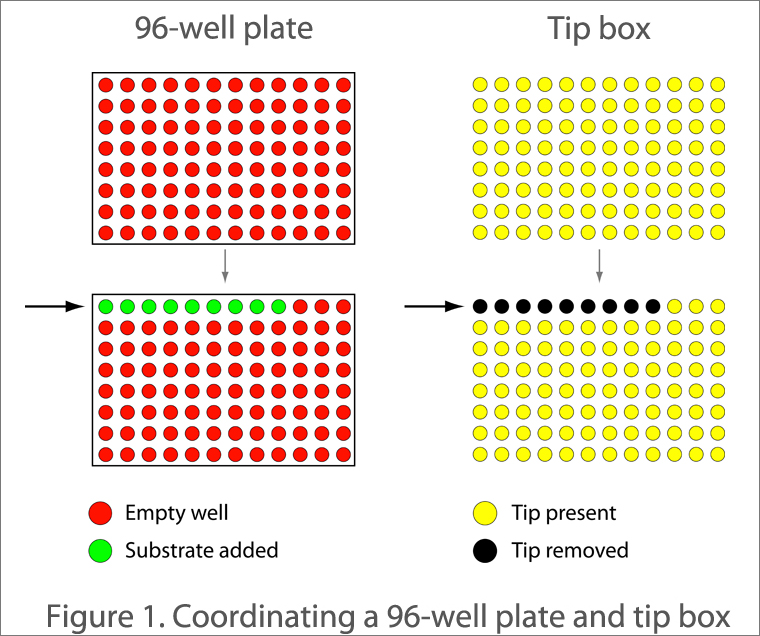 Recently, we introduced a series called Training Your Autopilot: Mastering Mindless Tasks dedicated to improving laboratory techniques by standardizing the processes of performing experiments. Routine assays can be about as engaging as watching paint dry, but it doesn’t mean we should be careless or sloppy – quite the opposite. So in this installment, we build upon our previous tip and show how to integrate it into our assays.
How to Weigh Small Amounts
by
Weighing out small amounts is always nerve-racking. Between a shaky hand, an unwelcomed breeze or a scale full of static, there are plenty of ways for your precious few milligrams of material to vaporize into thin air. As a result, it is often tempting to get the solid into the “safer” heavier flask where at least it will be protected. However, this is not always the best idea.
Five Ways Scientists Waste Time
by
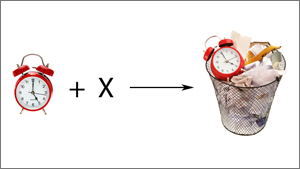 Notice the title is not “The only 5 ways scientists waste time…” Labs can be filled with a million distractions, and these days most of them reside on the internet. But we’re not talking about killing two hours on Hot or Not. We’re talking about how we waste time when we don’t know we’re wasting time. Those are the killers. And these days, with funding tight and postdocs seeming to stretch into oblivion, wasting time can have serious consequences.
Stealing Projects, Surviving Gross Experiments and Deceit
by
 Welcome to my first column! I am very excited to have the opportunity to contribute to BenchFly, and I look forward to answering your questions! I welcome all ideas, questions and comments and thanks to Sarah, Chris and Dave for helping kick off the series!
Dear Dora: Introducing Dora Farkas, Ph.D.
by
 We are very excited to announce a new segment at BenchFly called “Dear Dora,” a monthly advice column featuring Dora Farkas, Ph.D., author of “The Smart Way to Your Ph.D.: 200 Secrets from 100 Graduates.” Here, we introduce Dora by peppering her with questions, like any good scientist would…
The Importance of Sterile Technique
by
Messing up your own experiments is one thing. Messing up an entire lab’s is a whole nother. One of the easiest ways to make a large group of people furious with you instantly is to contaminate the incubator. It’s the equivalent of lighting their experiments on fire – they should be mad. The bad part is, it’s your fault. The good part is, it’s completely avoidable…
The Keys to a Great Hypothesis
by
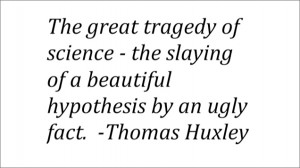 A great hypothesis is the foundation upon which great experiments may be designed and carried out. Hypotheses ultimately help us to make sense of the experimental data we observe. Non-hypothesis-driven research, we are often told, is a reckless fishing expedition that relies on luck and is not how research should be performed. Interestingly, the opposite of this criticism is the biggest danger of working with a hypothesis.
Are We Failing Our Graduate Students?
by
 In a recent article, “Finding a Partner for Your Ph.D.,” the AAAS/Science Business Office provided advice to prospective graduate students. They start by presenting horrifying graduation rate data (that their target audience probably shouldn’t even see…). Even scarier is their interpretation of what these data indicate. Regardless of how you interpret it, the bottom line is that we’ve got some serious problems.
