
 Sundays represent many things to many people. For chemists, this Sunday marks the birthday of physicist E.M. Purcell, discoverer of nuclear magnetic resonance (NMR). Born on August 30, 1912, Purcell discovered NMR in 1945 and shared the Nobel Prize in 1952 with Felix Bloch, who independently discovered it one month after Purcell.
Flyceum: Your Science. Your Career.
We’re following in the tradition of open discussions among scientists that has resulted in important advances in both science and society.
Lessons from EM Purcell
by
Technology Transfer: Applying the PhD Away from the Bench
by
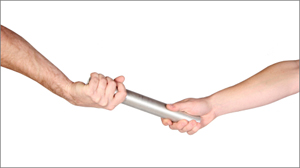 Training to be a research scientist as a graduate student and postdoc does not mean that our only career options are at the bench. In fact, these days more than ever, Ph.D.s are finding new opportunities to apply their expertise to a diverse range of exciting career paths. We spoke with Nicole Mahoney, Ph.D. about her decision to pursue a position in technology transfer and how the skills she learned in her graduate and postdoctoral work benefit her now.
The Non-U.S. Postdoc, Part 2
by
 Life as a new postdoc is tough. Life as a new postdoc in a new country can be tougher. In Part 2 of our interview with Wesley Straub, Ph.D. (Read Part 1 here) we asked the former postdoc to provide a survival guide for the first six months of the position. Here’s a breakdown of what to expect when starting a foreign postdoc.
The Non-U.S. Postdoc, Part 1
by
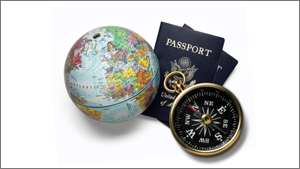 Choosing a postdoc is a very important decision in a scientist’s career. Selecting the P.I., institution and field are all factors in creating the perfect springboard for our careers. However, where you perform the postdoc can be just as important. To help understand the realities of selecting a postdoc outside of the United States, we talked with Wesley McGinn-Straub, Ph.D. about his decision to perform a postdoc in Germany.
Polypropylene vs Polystyrene
by
I sometimes feel like there is only one way to learn anything in lab: the hard way. A lot of little details in lab go unmentioned, yet can make or break an experiment, and you won’t know it until things either don’t work, or go horribly awry. Losing a day and a half because you didn’t realize that all plastic is not created equal falls into the latter category. Losing someone else’s day and a half is, well, infinitely worse.
Why Did I Become a Scientist?
by
 This is a question that I asked myself a lot through grad school and well into my post-doc. The phrasing was a little different though. The question I asked myself was something more like “why in the hell am I putting myself through this crap?” Everyone figures that the process of becoming an independent scientist will be an academically challenging one, but what one may not count on is that it is also psychologically challenging.
The Evolution of Scientific Impact
by
 In science, much significance is placed on peer-reviewed publication, and for good reason. Peer review, in principle, guarantees a minimum level of confidence in the validity of the research, allowing future work to build upon it. Typically, a paper (the current accepted unit of scientific knowledge) is vetted by independent colleagues who have the expertise to evaluate both the correctness of the methods and perhaps the importance of the work. If the paper passes the peer-review bar of a journal, it is published.
Email. The E is for Eeeeevil.
by
 If email had knuckles, inked across one hand would be the letters “L-O-V-E” and across the other: “H-A-T-E.” This probably describes some level of almost everyone’s relationship with the electronic beast. And with the likes of texting, IM and Twitter, the beast is only getting stronger…
How Do You Say Hoechst?
by
There’s a street in Nashville, Tennessee called “Demonbreun”. It’s a sure-fire way to tell tourist from local. Anyone can bust out a “y’all”, but utter “Demon-brewin’” and your cover is blown. Oh, and there will be laughter.
In science, there are a number of words that, if horribly mispronounced, can make us look like a hack and of course, will elicit laughter. In many situations, a word’s pronunciation may be more stylistic – like you say “toe-may-toe”, I say “toe-mah-toe.” This is not one of those situations. This word has an answer. After sitting through hundreds of seminars and group meetings and still not understanding how the word was actually supposed to be pronounced, I figured it’s time to get the answer.
Why is the Postdoc So Stressful?
by
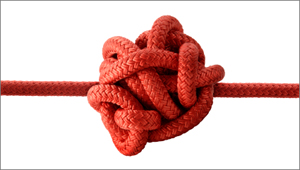 Today we’re following-up on Friday’s post (A degree of stress), in which we observed a trend towards elevated levels of stress during our postdocs. Although the trend emerged from only a small sample size, it seemed to be striking enough to warrant further consideration. Namely, why is the postdoc so stressful and what, if anything, can we do to alleviate it?
