
Graduate School Year 2: A Few More Hoops

Year 2In day two of our series, we profile the second year of grad school.  Here’s what to expect after the first year is history.

Guide to Graduate School: Year 2

FINALLY classes are over!  This is no small feat – after 20 years of sitting in a classroom, taking exams, you have reached the end.  However, the time that was previously filled with classes and rotations will now likely be spent teaching and stressing about the qualifying exam, which looms on the horizon for most second-year students.  But overall, it’s a good time and you’re one step closer to performing full-time research.
[Continue Reading…]

Eatin’ on the Cheap: Dahl

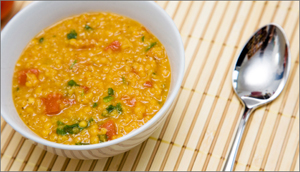
DahlI was never very good at chemistry. In my first year as an undergrad, I worked my butt off for a credit (that’s about 70% in Australia). I had an assignment due the next day and I knew it was going to be a late one. I was a smoker back in those days, so having cigarettes for a night of study was MUCH more important than nutrition. I had $10 in my pocket, and at the time cigarettes were $7 (they’re much more expensive than in the US). So this left me $3 for the nutrition component of the evening. I paced the aisles of the grocery store until I came across lentils.

[Continue Reading…]

Welcome to Graduate School!

WelcomeAll over the country today a new crop of eager young scientists begin their journey of discovery.  Graduate school is a great time of learning and exploration, but it can also be stressful – especially the beginning.  Perhaps the hardest part about the transition to grad school is the uncertainty involved.  When will I graduate?  Who should I work for?  What’s expected of me?  Can I drink the lab ethanol?

[Continue Reading…]

What’s the Most Valuable Part of Grad School?

Most important part of grad schoolGraduate school can be pretty overwhelming at first.  So many questions, so few answers.  With all of these new responsibilities, it’s hard to know how to prioritize them.  As a result, every decision can seem epic and therefore incredibly stressful.

[Continue Reading…]

How to Perform Colony PCR

Ligations can be painful.  Let’s just get that out of the way up front.  When I was first learning them as a grad student they were significantly more painful because I had no idea how sensitive they were to the amount of DNA added.  So as a beginner, I thought “I’m having trouble getting this insert to go in, I’ll just add more insert.”  Bad call.

[Continue Reading…]

Lessons from EM Purcell

NMRSundays represent many things to many people.  For chemists, this Sunday marks the birthday of physicist E.M. Purcell, discoverer of nuclear magnetic resonance (NMR).  Born on August 30, 1912, Purcell discovered NMR in 1945 and shared the Nobel Prize in 1952 with Felix Bloch, who independently discovered it one month after Purcell.

[Continue Reading…]

Bananas: Chemists in Little Yellow Labcoats

Bananas: Chemists in Yellow LabcoatsUntil we perfect the teleporter, transporting fruit will always pose a problem – particularly when the transport involves thousands of miles.  However, by elucidating the mechanisms of ripening for individual fruits, producers have developed reliable methods of transportation, which is why we can enjoy a banana split in the middle of winter.

[Continue Reading…]

Technology Transfer: Applying the PhD Away from the Bench

Tech transferTraining to be a research scientist as a graduate student and postdoc does not mean that our only career options are at the bench.  In fact, these days more than ever, Ph.D.s are finding new opportunities to apply their expertise to a diverse range of exciting career paths.  We spoke with Nicole Mahoney, Ph.D. about her decision to pursue a position in technology transfer and how the skills she learned in her graduate and postdoctoral work benefit her now.

[Continue Reading…]

The Non-U.S. Postdoc, Part 2

Non-US postdocLife as a new postdoc is tough.  Life as a new postdoc in a new country can be tougher.  In Part 2 of our interview with Wesley Straub, Ph.D. (Read Part 1 here) we asked the former postdoc to provide a survival guide for the first six months of the position.  Here’s a breakdown of what to expect when starting a foreign postdoc.

[Continue Reading…]

The Non-U.S. Postdoc, Part 1

Foreign postdocChoosing a postdoc is a very important decision in a scientist’s career.  Selecting the P.I., institution and field are all factors in creating the perfect springboard for our careers.  However, where you perform the postdoc can be just as important.  To help understand the realities of selecting a postdoc outside of the United States, we talked with Wesley McGinn-Straub, Ph.D. about his decision to perform a postdoc in Germany.


[Continue Reading…]